Why Dental Crowns in Los Angeles CA Are Worth Considering

A dental crown is one of those treatments people often hear about long before they understand what it actually does. Many assume it is simply a cap placed over a damaged tooth, and while that description is not wrong, it leaves out the practical reason crowns matter so much. A well-made crown can protect a weakened tooth, restore the way you chew, improve how your smile looks, and in many cases help you avoid an extraction that would lead to a more involved replacement later.
That matters in any city, but it matters in a place like Los Angeles for some very specific reasons. People here tend to expect a lot from their teeth. They want comfort, reliability, and appearance to work together. They often have demanding schedules, public-facing jobs, long commutes, and little patience for recurring dental problems. In my experience, that combination makes crowns one of the most useful treatments to discuss when a tooth has crossed the line from minor repair into structural trouble.
When patients start researching Dental Crowns Los Angeles CA, they are usually trying to answer a simple question: is this really worth it, or is there a cheaper, easier fix? The honest answer depends on the tooth, the bite, and the amount of remaining healthy structure. Still, there are many situations where a crown is not the more aggressive choice. It is the more sensible one.
What a crown actually does for a tooth
A filling replaces missing tooth structure in a limited area. A crown covers the visible portion of the tooth and redistributes force over a broader surface. That difference is important.
Teeth crack for reasons that build up quietly over time. A large old filling weakens the walls of a molar. Years of clenching create microfractures. Decay undermines the center of the tooth. A root canal removes infected tissue, but also leaves the tooth more brittle than before. In each of those cases, the issue is no longer just a cavity or a cosmetic defect. The issue is whether the tooth can keep handling daily function without splitting further.
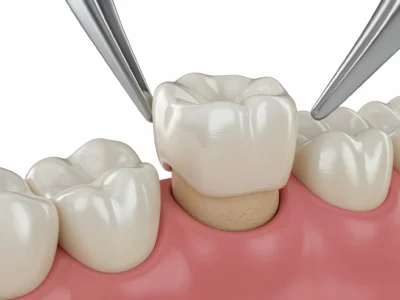
A crown gives the tooth a new outer shell. When designed and bonded properly, it can hold together a tooth that would otherwise be at high risk for breakage. For back teeth in particular, that support can be the difference between preserving the tooth for years and losing it after one hard bite on a toasted crust or olive pit.
This is where patients sometimes get confused. They may not be in pain, so they assume the tooth is stable. Pain is not a perfect measure of damage. I have seen teeth with no symptoms at all that were one fracture away from needing extraction. I have also seen patients delay treatment because the tooth only bothered them occasionally, then return after a piece sheared off and the treatment options became narrower and more expensive.
The Los Angeles factor, function and appearance both matter
There is no point pretending aesthetics are a minor concern in Los Angeles. They are not. For many people, a smile is tied to confidence, work, social life, and self-presentation. But it would be a mistake to think crowns are only about cosmetics. The best crown work blends appearance with engineering.
Front teeth need shape, translucency, and color harmony. Back teeth need strength, proper contact with neighboring teeth, and a bite that does not throw stress onto the jaw or surrounding teeth. A crown that looks attractive but feels high when you chew will not stay comfortable. A crown that is strong but too opaque or bulky may technically function, but it will not satisfy someone who notices every detail when they smile in photos or speak on camera.
That balance is one reason Dental Crowns Los Angeles CA tends to be such an active search term. Patients are often looking for treatment that meets both standards at once. In a city where cosmetic awareness runs high, people still need dentistry that behaves well under real chewing forces. Good crown work is never just one or the other.
When a crown makes more sense than another filling
There is a moment in the life of many teeth when repeated patching stops being conservative and starts being shortsighted. Patients do not always hear that clearly, because everyone likes the idea of the smallest treatment possible. Dentists do too. No one places a crown just for the sake of doing more dentistry. The goal is to choose the restoration that gives the tooth the best odds over time.
A crown often becomes worth considering when a tooth has a large existing filling that takes up much of the chewing surface, when one or more cusps are cracked or undermined, when decay extends in a way that leaves thin walls behind, or when the tooth has had root canal treatment. Those are not cosmetic technicalities. They change the way force moves through the tooth every single day.
I remember one patient who had replaced the same large molar filling twice in less than five years. Each repair seemed modest at the time. Each time, another edge fractured off. By the time the crown conversation finally happened, the tooth had become a patchwork of old material and fragile enamel. The crown was not the expensive extra. It was the first treatment that actually respected the condition the tooth was in.
That pattern is common. A series of smaller repairs can end up costing more, both financially and biologically, than doing the structurally Dental Crowns Los Angeles CA appropriate treatment earlier.
Crowns after root canal treatment, why timing matters
Root canal therapy solves infection inside a tooth, but it does not restore lost strength. Once the nerve space has been cleaned and sealed, the tooth still has to survive normal use. For molars and premolars, that often means a crown is strongly recommended.
The reason is simple. These teeth carry heavy chewing loads. After decay, prior fillings, and access for the root canal, the remaining tooth may no longer be able to flex safely. A crown helps protect it from splitting vertically, which is one of the most frustrating failures because a vertical root fracture often cannot be repaired.
Patients sometimes want to postpone the crown because the pain is gone after the root canal. That is understandable. The urgent problem feels solved. But from a structural standpoint, the tooth may be entering its most vulnerable phase. Waiting too long can undo the benefit of the root canal if the tooth fractures before the final restoration is completed.
Not every root canal tooth requires the same approach. Front teeth with minimal loss of structure may not always need a full crown. Back teeth are another story. The stronger the chewing forces and the larger the missing tooth structure, the stronger the case for full coverage.
The materials discussion is more practical than many people expect
Patients often ask whether porcelain, ceramic, zirconia, or porcelain fused to metal is best. The answer depends on location, bite forces, cosmetic goals, and how much room exists between the teeth. Material choice should come from those factors, not from whichever term sounds newest or strongest.
All-ceramic and porcelain-based restorations can look very natural, especially in visible areas. Zirconia has become popular for its strength and versatility, particularly for back teeth and for patients who clench. Porcelain fused to metal still has uses, though it is less commonly chosen in some cosmetic cases because the metal substructure can affect light transmission and, over time, may show near the gumline in certain situations.
What matters most is not the marketing language around the material. It is the match between the material and the job the crown needs to do. A beautiful crown placed on a heavy grinder without enough thickness or with poor bite adjustment may chip or fail. A very strong crown that is overcontoured can irritate the gum tissue and trap plaque. Material is important, but design, preparation, fit, and occlusion matter just as much.
In Los Angeles practices, where patients often want both high esthetics and durability, these conversations tend to be more detailed. That is a good thing. Dental care works better when the patient understands the trade-offs.
Comfort, confidence, and the daily quality-of-life piece
A lot of the value of a crown shows up in small everyday moments. You chew on both sides again without subconsciously protecting one tooth. You stop worrying that something will crack during dinner. Cold sensitivity eases when exposed dentin is sealed and a compromised cusp is no longer flexing. Food stops packing into a broken contact area. Your bite feels stable.
Those are not dramatic before-and-after moments, but they improve daily life in a real way.
For front teeth, the emotional effect can be just as significant. A discolored or badly worn tooth can draw attention every time someone laughs, presents in a meeting, or appears in photographs. A well-done crown can restore proportion and color in a way that lets the tooth blend naturally with the rest of the smile. The best result is often one that other people never notice. They just think the smile looks healthy.
I have seen patients spend months hesitating over a crown for a visible tooth because they feared it would look fake. When the final restoration is done thoughtfully, their reaction is often relief more than excitement. The tooth no longer stands out for the wrong reasons, and they stop thinking about it. That is a successful outcome.
Why delaying treatment can narrow your options
Teeth rarely get stronger by waiting. A cracked cusp does not usually heal. Decay at the edge of a failing filling tends to spread, not stabilize. If the tooth breaks below the gumline or splits into the root, the conversation can shift from crown to extraction very quickly.
That change carries practical consequences. Replacing a lost tooth may involve an implant, bridge, or removable appliance. Each has its place, but each is typically more involved than preserving a restorable natural tooth with a crown. There is also a timeline issue. A crown can often restore function relatively efficiently. Tooth loss and replacement often mean additional appointments, healing phases, and higher total cost.
This is one of the least glamorous parts of dentistry, but also one of the most important. Earlier intervention, when the tooth is still salvageable and the margins can be placed cleanly, generally leads to simpler treatment and more predictable results. Once damage becomes extensive, the biology starts dictating the limits.
Cost, value, and the question patients really mean to ask
When people ask whether a crown is worth the money, they are usually not asking only about the fee. They are asking whether the result will hold up, whether it will solve the problem rather than postpone it, and whether there was a better alternative they should have considered.
That is the right question.
Crowns are not inexpensive, especially in a major metropolitan area. Fees vary by office, material, complexity, and whether additional procedures are needed. Los Angeles also has a wide range of practice models, from high-volume insurance settings to boutique cosmetic practices, and pricing reflects those differences. But value is not the same thing as price.
A lower-cost restoration that fails early, feels off in the bite, or leads to gum irritation can become expensive in a hurry. A well-executed crown that functions for many years is often a better use of money than repeated repairs on a tooth that has already outgrown the filling stage.
Insurance can help, but coverage often comes with limitations, waiting periods, downgraded material allowances, or frequency restrictions. Patients do best when they understand their benefits without letting the insurance policy define the standard of care. Insurance is a contribution to treatment, not a clinical opinion.
What the process usually looks like
For patients who have never had one, the crown process is often less dramatic than expected. The tooth is evaluated, shaped so the crown can fit properly, and scanned or impressed. A temporary crown is usually placed while the final restoration is made. At the delivery appointment, the fit, bite, color, and contacts are checked before the crown is cemented or bonded.
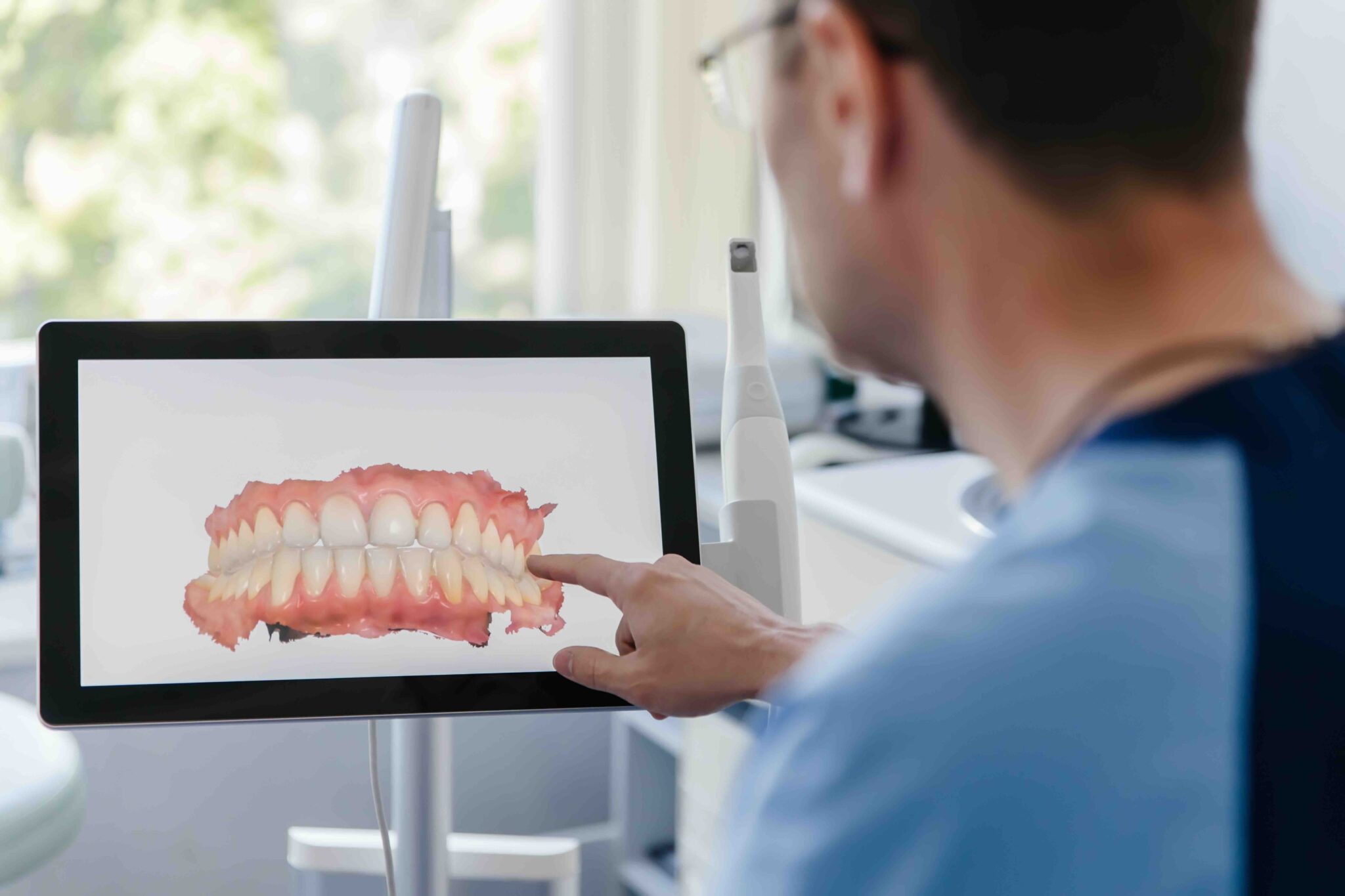
Digital workflows have improved parts of this process. Many offices now use intraoral scanners instead of traditional impression material, which can be more comfortable. Some practices offer same-day crowns for selected cases, though not every tooth or every bite is ideal for that route. A conventional laboratory-fabricated crown may still offer advantages in certain esthetic or complex situations.
The temporary phase tells you more than many patients realize. If the temporary feels bulky, catches food, or seems high in the bite, those details are useful because they can inform adjustments to the final crown. A good office treats that feedback seriously.
Signs you should ask whether a crown is appropriate
There is no substitute for an exam and X-rays, but a few situations commonly point toward a crown discussion rather than another small repair:
- A tooth has a very large filling and a piece has chipped or cracked off.
- You have had root canal treatment on a back tooth.
- Chewing on one side produces sharp pain, especially on release, which can suggest a crack.
- A tooth is badly worn down from grinding or erosion.
- A front tooth is structurally compromised and also has significant cosmetic issues.
None of these automatically means a crown is the answer, but they are strong reasons to ask.
How to judge whether crown treatment is being planned well
Patients are often unsure what separates careful crown dentistry from rushed crown dentistry. You do not need technical training to notice a few important things. A thoughtful evaluation includes the condition of the remaining tooth, the health of the gums, the way your teeth meet, and whether you clench or grind. If those factors are barely discussed, the planning may be too shallow.
You should also expect clarity about what the crown is fixing. Is the main issue fracture risk, old decay, cosmetic damage, post-root-canal protection, or a combination of these? A good explanation tends to be specific. Vague reassurances are less useful than hearing, for example, that the distal cusp is undermined, the existing filling covers most of the occlusal surface, and another direct restoration would leave thin unsupported enamel likely to break.
If you are comparing providers for Dental Crowns Los Angeles CA, pay attention not just to photos and promises, but to how thoroughly the office evaluates fit, esthetics, and long-term maintenance. Crowns succeed because they are planned well, not because they are advertised well.
Longevity depends on more than the crown itself
A crown can last many years, sometimes well over a decade, but life span varies. The crown is only as stable as the tooth underneath, the cement seal around it, and the forces placed on it.
Grinding and clenching shorten the odds for almost any restoration. So does poor home care, especially when plaque accumulates near the margins and the gums remain chronically inflamed. Diet matters too. Constant sipping of acidic drinks, chewing ice, or using teeth as tools can sabotage otherwise solid work.
Night guards are not glamorous, but for patients who clench, they can be a smart way to protect both crowns and natural teeth. Routine cleanings and exams matter because small issues at the margin can sometimes be caught before they become major failures. A crown is durable, not indestructible.
The best reason to consider a crown
The strongest argument for a crown is not that it makes a tooth look perfect or that it uses premium materials. It is that, in the right case, it respects how the tooth is actually functioning in your mouth. Dentistry works best when treatment matches structural reality.
If a tooth is still small-cavity territory, a filling may be the right answer. If a tooth is severely damaged beyond predictable restoration, removal and replacement may need to be discussed. But there is a broad middle ground where a natural tooth can still be preserved and strengthened. That is where crowns earn their reputation.
For many patients, especially those balancing appearance, busy schedules, and the desire to avoid future emergencies, Dental Crowns Los Angeles CA are worth considering because they solve more than one problem at a time. They protect compromised teeth, restore reliable function, and often improve appearance in the process. When done at the right moment, they are not an upgrade for its own sake. They are a practical decision that can save a tooth from becoming a bigger problem later.
Simple Dental Vermont
Address: 8914 S Vermont Ave, Los Angeles, CA 90044
Phone number: +13239493000
FAQ About Dental Crowns Los Angeles CA
How much do crowns cost per tooth?
In the United States, a single dental crown typically costs between $800 and $2,500 per tooth without insurance. The ultimate out-of-pocket price depends heavily on the crown material, the location of the tooth, and whether you have dental insurance coverage.
What is the downside of crowns on teeth?
The primary downside of a dental crown is that the procedure permanently removes natural tooth enamel to shape the tooth for the cap.
Why do dentists push for crowns?
Dentists recommend crowns because a large filling cannot provide enough strength when a tooth loses a major portion of its structure or faces heavy chewing pressure.